Currency:

USD
HKD
GBP
EUR
CAD
AUD
CHF
INR
USD
sign in · join Free · My account
Home | Sale | Customer Service | Info Tech | Delivery and Payment | Buyer Protection | Policy Information | PC Niche
Your Position: Home > Book > eBooks > The Fall and Redemption of Doña Yutanga

View History

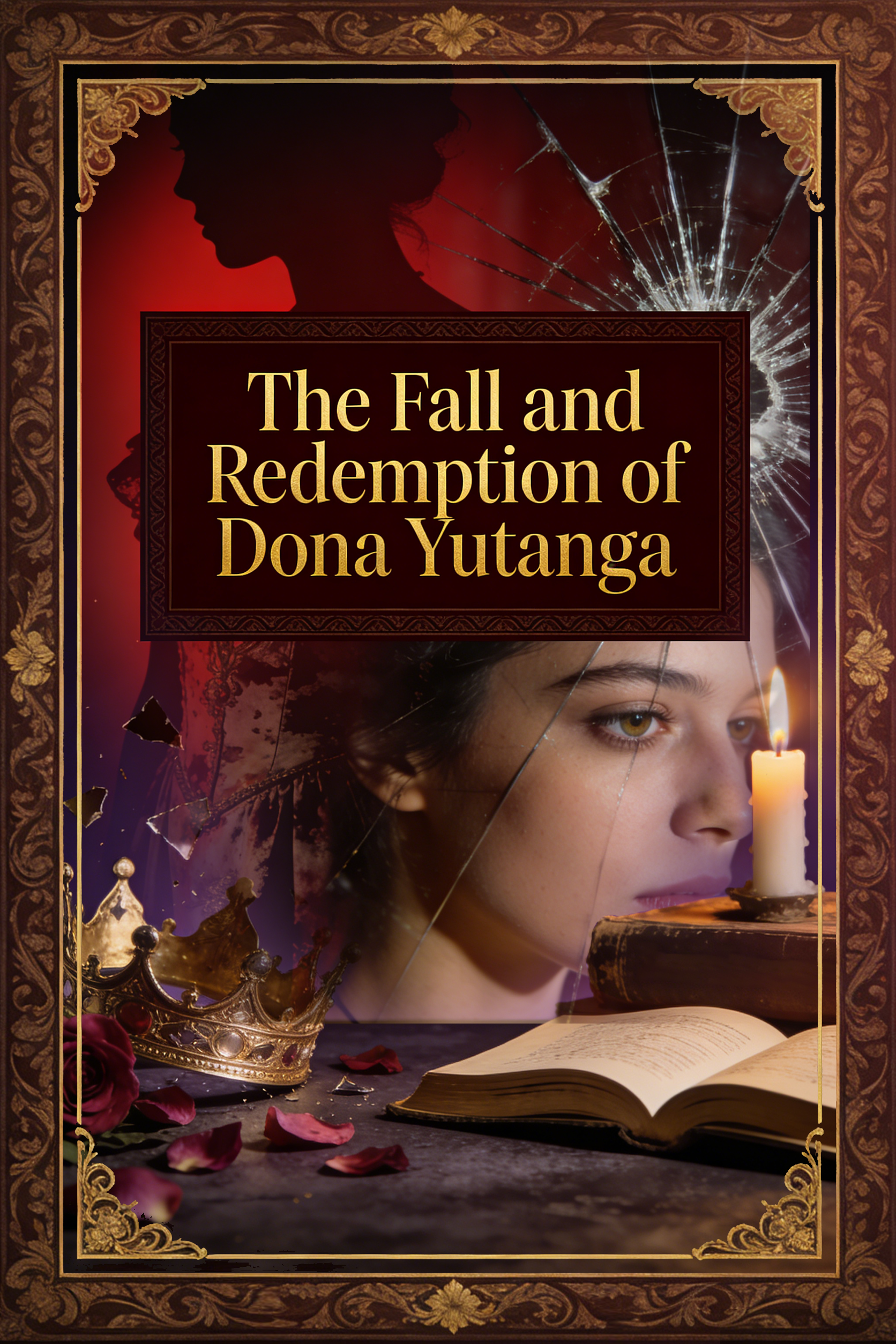
The Fall and Redemption of Doña Yutanga
prev zoom next
The Fall and Redemption of Doña Yutanga
  • Buyer protection: Returns accpeted. Paypal accepeted.
  • Item location: Oxford, United Kingdom
  • Posts to: Worldwide
  • Brand:Nokia
  • Weight:0gram
  • Recently sold:21
  • Market price:$2.99
    Sale price:$1.29
  • User reviews: comment rank 5
  • Total:
  • Quantity:

Goods Brief:

Attribute

The Fall and Redemption of Doña Yutanga ———  •  ——— A Spanish Romance of the Nineteenth Century  Part I: The Passionate Beginning Chapter One: The Flower of Andalusia In the golden age of Spanish Romanticism, when the spirit of liberty danced upon the winds of change and the ancient walls of Granada whispered tales of Moorish splendor, there lived a maiden whose beauty was spoken of in hushed tones from Seville to Madrid. Doña Yutanga de la Vega, daughter of the illustrious Marqués de la Vega de Henares, possessed not merely the physical grace that made poets weep and gallants sigh, but a soul burning with that peculiar intensity which the Andalusian sun seems to infuse into the hearts of those born beneath its fiery gaze. The Palacio de la Vega stood as a testament to the grandeur of Old Spain, its marble halls echoing with the footsteps of generations who had served their king and honored their name above all earthly treasures. Here, in the year of Our Lord 1835, when the echoes of Ferdinand's tyranny still reverberated through the peninsula and the liberal spirit awakened in the hearts of the young, Doña Yutanga reached the age of eighteen—an age when Spanish maidens are expected to have their destinies arranged by prudent mothers and ambitious fathers. But Yutanga was not like other maidens of her station. While her peers practiced the delicate arts of embroidery and calculated the dowries of potential suitors with the precision of merchants, she devoured the forbidden volumes of Byron and Rousseau that her brother Eduardo smuggled into the house from his years at the University of Salamanca. She dreamed not of advantageous marriages and the management of great estates, but of love—passionate, consuming, all-devouring love such as the troubadours sang of in ancient ballads, such as drove the great lovers of history to glory or ruin. “Love without sacrifice is but a shadow of the true flame,” she would whisper to her mirror, her dark eyes flashing with the intensity that would one day be her salvation and her doom. “I would rather burn in the fire of true passion than warm myself at the tepid hearth of convenience.” Her mother, the Marchioness, a woman of impeccable lineage and frozen emotions, despaired of her daughter's romantic notions. “You speak like a character in one of those scandalous novels that are corrupting the youth of our nation,” she would chide, her fan fluttering with agitation. “Marriage is an alliance, my daughter, a contract between families. Love, if it comes at all, is a pleasant surprise, like finding an extra olive in one's martini.” But Yutanga would only smile that mysterious smile that made her seem older than her years, and reply in the words of the poet Espronceda: “I would rather be a pirate free upon the seas than a prince in chains of gold.” It was in the spring of that year, when the jasmine bloomed in the gardens of the Alhambra and the nightingales sang of love in every orange grove, that destiny prepared its cruel and magnificent design. The Marqués de la Vega, a man of liberal sympathies who had suffered under the previous reign, determined to host a gathering of intellectuals and artists at his country estate near Granada—a defiant celebration of the new freedoms that had come with the death of the tyrant king. “We must show the world,” he declared to his family, “that the spirit of Spain cannot be crushed by despotism. Art, literature, philosophy—these are the true inheritance of our children, not merely lands and titles.” Among the guests invited to this gathering was a young man whose name was then unknown to the great families of Spain, but whose destiny would become inextricably intertwined with that of Doña Yutanga. Juan de Mendoza y Alcázar was the illegitimate son of a minor nobleman and a seamstress from the barrio of Triana in Seville. His father, acknowledging the boy's unusual intelligence, had provided for his education before dying of fever when Juan was but fifteen. Left to his own devices, the young man had supported himself through tutoring, copying manuscripts, and any honest labor that would allow him to continue his studies. Now, at the age of twenty-four, he had come to Granada at the invitation of a professor who had recognized his exceptional abilities. He possessed nothing but his books, his ambitions, and a face that might have been called handsome if one overlooked the hunger that haunted his eyes and the threadbare condition of his only decent coat. The day of the gathering dawned bright and clear, with a breeze from the Sierra Nevada carrying the scent of pine and snow. The gardens of the Palacio de la Vega had been transformed into an outdoor salon, with carpets spread upon the lawn and musicians positioned beneath the ancient olive trees. Poets recited verses beneath the shade of awnings, philosophers debated the merits of the new constitution, and young ladies in their finest muslins paraded like butterflies among the flower beds. Doña Yutanga, dressed in a gown of white silk that set off her olive complexion and raven hair, moved through the gathering with the grace of one who knows herself observed and admired. Her mother had presented three eligible suitors that morning—a duke, a count, and a wealthy industrialist from Barcelona—and she had endured their attentions with the polite disinterest of one enduring a necessary but tedious ritual. It was then, seeking escape from the attentions of the Duke of Alburquerque, whose conversation consisted entirely of the merits of his hunting dogs, that she wandered toward the eastern garden, where a small pavilion housed her father's collection of rare books. She found him there, this unknown young man, standing before a shelf with a volume of Cervantes open in his hands, so absorbed in its pages that he seemed unaware of the magnificent view of the Sierra Nevada visible through the window behind him. He was dressed in black, the universal uniform of the poor scholar, but he held himself with a dignity that caught her attention. “You read Don Quixote with remarkable concentration, señor,” she said, her voice carrying that slight teasing note that Spanish women employ so effectively. “I would have thought a young man of your apparent seriousness would prefer the philosophical treatises that are so fashionable among the progressives.” Juan looked up, startled, and found himself gazing into the most extraordinary eyes he had ever beheld—dark as midnight, yet burning with an inner light that seemed to pierce through all his defenses, all his carefully constructed barriers against the world. “Forgive me, señorita,” he stammered, closing the book with hands that trembled slightly. “I did not mean to intrude. I was told the library was open to the guests, and I... I have never had the opportunity to see this edition.” “It is a first edition,” Yutanga said, moving closer with that unconscious grace that was her birthright. “My great-grandfather purchased it directly from the printer in Madrid. You handle it as if it were a sacred relic.” “To me, it is,” Juan replied, and something in his earnest tone, in the intensity of his dark eyes, made Yutanga's heart beat faster. “Don Quixote taught me that honor and nobility are not matters of birth but of the spirit. When I was a child in Triana, hungry and cold in winter, I would read of the knight's adventures and believe that a better world was possible.” “You speak of hunger,” Yutanga said softly, and for the first time in her privileged life, she truly saw poverty—not as an abstract concept to be alleviated by charity, but as a lived reality that had shaped this young man's entire existence. “Tell me, señor... I do not know your name.” “Juan de Mendoza, at your service, señorita.” He bowed with a formality that seemed almost ironic given his circumstances. “And I know yours, for who in Granada has not heard of the beauty of Doña Yutanga de la Vega? Though I confess, the reports did not do justice to the reality.” She laughed, a sound like silver bells. “Flattery, señor? I would not have expected it from a scholar.” “Not flattery, señorita. Truth. The only currency I possess in any abundance.” They talked for an hour, there in the quiet library, while the sounds of the garden party drifted through the open windows like music from another world. Juan spoke of his studies, of his dreams of becoming a lawyer and using his knowledge to fight for justice for the poor. Yutanga spoke of her secret love for poetry, for the romantic ideals that her family considered dangerous and impractical. “You are the first person,” she said, her eyes shining, “who has not laughed at my dreams of love and sacrifice. My mother says I read too many novels.” “Your mother fears what she does not understand,” Juan replied. “The capacity for passionate love is the greatest gift God bestows upon humanity. Without it, we are merely animals seeking comfort and security. With it, we become capable of sacrifice, of heroism, of transcendence.” When Yutanga finally returned to the garden, her cheeks were flushed and her eyes held a brightness that her mother immediately noticed with suspicion. “You disappeared for nearly an hour,” the Marchioness said, her voice low but sharp. “The Duke was asking after you.” “I was in the library, madre. Talking with one of the guests.” “Which guest?” “A young scholar. Juan de Mendoza.” The Marchioness's face darkened. “The illegitimate son of that minor Alcázar? The one who arrived in a borrowed coat? Yutanga, I forbid you to speak with him again. Such connections can only damage your reputation.” But Yutanga only smiled that mysterious smile. “I am not yet engaged, madre. And even when I am, I shall choose my own friends.” That night, as she lay in her canopied bed listening to the nightingales, Doña Yutanga knew with the certainty that only the young can possess that her life had been irrevocably changed. She had met her destiny in the form of a poor scholar with burning eyes and a soul that spoke to hers across all barriers of class and fortune. She did not yet know how much that destiny would demand of her, how much she would be called upon to sacrifice in the name of that love which she had so fervently desired. She did not know that passion, like fire, warms the faithful but consumes the unwary. She knew only that she had found what she had been seeking all her life—a kindred spirit, a soul that recognized her own. And in the small room he rented in the old quarter of Granada, Juan de Mendoza lay awake, staring at the ceiling, knowing that he had looked into eyes that would haunt him until his dying day. He knew the impossibility of his position, the absurdity of a poor scholar aspiring to the hand of a marqués's daughter. But he also knew, with the fierce pride that poverty had forged in him, that he would find a way to make himself worthy of her. “I shall become great,” he whispered to the darkness. “For her sake, I shall climb to heights that will make her family beg me to accept her hand. This I swear upon my honor and my soul.” Thus began the romance that would become legend throughout Andalusia, a tale of love and sacrifice, of betrayal and redemption, that would be told and retold in the plazas and taverns of Spain for generations to come. Chapter Two: The Flame of Devotion In the weeks that followed their first meeting, Juan and Yutanga contrived to see each other with the ingenuity that only lovers possess. Under the pretext of charitable works among the poor of Granada, Yutanga made frequent visits to the city, and Juan somehow always happened to be at the same locations—at the Cathedral, at the Alcaicería, at the gardens of the Triunfo. Their conversations deepened with each encounter. Juan spoke of his studies at the University of Granada, where he was preparing for the examinations that would qualify him to practice law. He confessed his poverty without shame, for in Yutanga's eyes he saw not pity but respect. “I have nothing to offer you,” he said one afternoon as they walked along the Darro River, hidden from view by the overhanging willows. “No fortune, no family connections, no prospects but what I can create through my own efforts. Any rational woman would reject my addresses.” “Then I am proud to be irrational,” Yutanga replied, her hand finding his. “I have met men with fortunes and titles, Juan, and found them empty. You possess what they lack—a soul that burns with purpose, with the desire to make the world better. That is worth more than all the gold in the Americas.” But her family would not be so easily convinced. When the Marqués discovered the true nature of his daughter's interest in the young scholar, his reaction was swift and terrible. “You would disgrace our name,” he thundered, pacing the library where Yutanga had first met Juan. “A bastard from Triana! A man who doesn't know who his own mother was! The scandal would destroy your sister's prospects, your brother's career. I absolutely forbid you to see him again.” “You cannot forbid me to love him, padre,” Yutanga replied calmly. “And if you drive him away, you will drive me with him.” The confrontation ended in a stalemate, with the Marqués unwilling to force the issue and Yutanga unwilling to back down. But the damage was done—the family was now alert to the danger, and Yutanga's movements were watched with increasing suspicion. It was then that Yutanga made the decision that would alter the course of both their lives. She began to systematically transfer her personal fortune to Juan's support, selling her jewels, her property, anything that could be converted to cash without arousing immediate suspicion. “I am investing in our future together,” she told him when he tried to refuse her gifts. “When you are a great lawyer, a judge, perhaps even a minister of state, you will repay me a thousandfold—not in money, but in the life we shall share.” By the time Juan sat for his examinations in the spring of 1837, Yutanga had spent nearly thirty thousand escudos on his behalf—a sum that would have constituted a respectable dowry for any Spanish lady. She had sold her grandmother's pearls, her own emerald necklace, and several parcels of land that had been her personal property. Juan's success exceeded all expectations. He placed first among all candidates in Andalusia, earning the praise of the examining magistrates and the attention of influential patrons. Within months, he was offered a position as assistant to the chief prosecutor of the Audiencia of Granada. “I have done it, my love,” he wrote to Yutanga. “I have taken the first step on the path that will lead me to you. By this time next year, I shall be in a position to approach your father with my head held high.” Chapter Three: The Seeds of Doubt The year 1838 dawned with promise for Juan de Mendoza. His position at the Audiencia brought him into contact with the most powerful men in Granada, and his brilliant handling of several difficult cases attracted favorable notice from Madrid. But success brought with it temptations that Juan, for all his idealism, was not fully prepared to resist. It was at this vulnerable moment that he encountered Doña Beatriz de Montemar. Beatriz was the widow of a wealthy industrialist from Barcelona, a woman of thirty who possessed both the cold beauty of a marble statue and the calculating mind of a chess master. She saw in Juan de Mendoza a potential solution to her financial difficulties. “A man of your talents should not be dependent on a woman's charity,” she said one evening. “However noble her intentions, the fact remains that you owe your position to her money. Can you ever truly be her equal while that debt remains unpaid?” The poison that Beatriz introduced into Juan's mind worked slowly but inexorably. He began to see slights where none were intended, to interpret Yutanga's family's polite reserve as contempt, to doubt the sincerity of Yutanga's love even as she continued to support him with her dwindling fortune. The Marqués de la Vega died on a rainy night in October 1838, surrounded by his family. With his death, Yutanga's position became precarious. Her mother, now the Dowager Marchioness, controlled the family fortune and had the legal authority to dispose of her daughter's future as she saw fit. “You will remain here,” her mother informed her, sending her to the remote family estate in Jaén, “until you come to your senses.” Yutanga was imprisoned in her own family's castle, with no friends but her maid Concha and no hope but her faith in a love that seemed increasingly distant. Part II: The Betrayal Chapter Four: The Shadow Falls The winter of 1838-39 was the coldest in living memory. In the mountain fortress where Yutanga was imprisoned, the chill seemed to penetrate to the very bones of its inhabitants. In the spring of 1839, a lawyer from Granada arrived with shocking news. The Dowager Marchioness had married Don Esteban de Narváez, and as part of the marriage contract, she had transferred control of the family estates to her new husband. “Don Esteban has made it clear that he does not wish to support 'the romantic follies of his stepdaughter,'” the lawyer explained. “He threatens that your... instability... might be evidence of a disordered mind. He speaks of confinement, señorita. Not in a fortress such as this, but in a place where those who are troubled are sent for their own protection.” Yutanga understood immediately. Her stepfather was threatening to have her declared insane, to lock her away in one of those terrible asylums where inconvenient women were hidden from the world. That night, under cover of darkness, Doña Yutanga de la Vega and her faithful maid slipped out of the fortress and began the dangerous journey to Granada. They traveled by back roads and mountain paths, enduring hardships that would have broken a less determined spirit. They arrived in Granada to find that Juan had moved to Madrid, or so they were told. In truth, Juan had suffered a riding accident on his way to rescue Yutanga and had been unconscious for weeks. By the time he recovered and went to Jaén, he was told that Yutanga had married the Duke and gone to France. Heartbroken, believing himself betrayed, Juan had accepted a position in Seville. And Yutanga, unable to find him, took employment as a governess to support herself. Chapter Five: The Trap Springs The months that followed Yutanga's arrival in Granada were the most difficult of her life. She found employment as a governess, but her stepfather had not forgotten his rebellious stepdaughter. “She must be silenced,” Don Esteban had declared. “Permanently.” The trap was subtle and cruel. Yutanga was entrusted with the care of her employer's youngest child, a boy named Miguel. One evening, she found the child lying in his bed, his face contorted in pain, foam at his lips. Before she could call for help, the child died. A servant produced a bottle of poison that she claimed to have found hidden in Yutanga's room. The judge who presided over the preliminary hearing was Don Esteban's creature. He ordered Yutanga confined to the prison of Granada to await trial. “You are charged with murder,” he intoned. “The murder of an innocent child entrusted to your care. If found guilty, you will be executed.” Chapter Six: The Depths of Despair The prison of Granada was a medieval structure of stone and iron, a place where the screams of the tortured echoed through corridors slick with filth and despair. Yutanga was placed in a cell barely large enough to stand in. “Confess,” her jailer told her. “Confess and your suffering will be ended quickly. Refuse to confess, and you will linger here for months, perhaps years, before your trial.” “I am innocent,” Yutanga said, her voice steady despite her terror. “I will not confess to a crime I did not commit.” The trial began on a cold morning in November 1839. The courtroom was packed with spectators, drawn by the sensational nature of the case. The verdict was guilty, and the recommendation was death. Part III: The Redemption Chapter Seven: The Awakening In the week that followed the verdict, Juan de Mendoza did not sleep. He paced his chambers through the night, reviewing the evidence, reading Yutanga's letters, struggling with the conflict that raged in his soul. A letter arrived from Don Esteban de Narváez, offering Juan a position on the Supreme Court in exchange for ensuring Yutanga's execution. The naked corruption of it forced Juan to confront the truth about himself. “What have I done?” he whispered to the empty room. “Dear God, what have I done?” He began to investigate, and slowly, piece by piece, the truth emerged. The servants who had testified against Yutanga confessed they had been paid by Narváez's agents. The doctor's original notes revealed that the child had died of a different poison than the one found in Yutanga's possession. Most damning of all was the discovery of Narváez's motive. Yutanga had discovered evidence that Narváez had murdered her father, slowly poisoning him over months to gain control of the family fortune. The night before sentence was to be pronounced, Juan went to Yutanga's cell. He fell to his knees before her, his voice breaking. “I have been a fool, Yutanga. A blind, proud, vindictive fool. I know the truth now. All of it. Can you forgive me?” She looked at him for a long moment. “I forgive you,” she said softly. “I forgave you long ago, Juan. I knew that you were hurting, that you had been deceived as I had been. I never stopped loving you, even when I thought you had condemned me.” Chapter Eight: The Reckoning The next morning, Juan entered the courtroom with a face of stone and a heart full of purpose. He presented the proof of Yutanga's innocence—the confessions of the bribed servants, the testimony of the doctor, the analysis of the poison. And then, the final piece of evidence. Don Esteban de Narváez himself, brought to the courtroom under guard. “You have committed murder,” Juan said coldly. “The murder of the Marqués de la Vega. And you attempted to murder your stepdaughter with false justice, to silence her knowledge of your crime.” The verdict was reversed. Yutanga was declared innocent, her name cleared of all suspicion. Juan turned to Yutanga, his eyes burning with emotion. “Doña Yutanga de la Vega, I have wronged you grievously. But I can offer you what I should have offered long ago—my heart, my hand, and my eternal devotion. Will you do me the honor of becoming my wife?” “I will,” she said, her voice clear and strong. “I have loved you from the moment we met. I would be honored to be your wife.” Chapter Nine: The New Beginning The wedding of Doña Yutanga de la Vega and Don Juan de Mendoza y Alcázar took place in the spring of 1840, in the Cathedral of Granada. It was a ceremony of unusual simplicity for a woman of Yutanga's rank. “We have learned,” Yutanga told her brother, “that true nobility is not a matter of titles or fortunes, but of the spirit. Juan and I begin our life together with nothing but our love and our honor, and that is more than enough.” Juan resigned his position as a judge and established himself as an advocate for the poor. Yutanga worked beside him, using what remained of her fortune to establish schools and hospitals for the needy. They had seven children, each raised to believe in the power of love, the importance of honor, and the duty of the privileged to serve those less fortunate. When they died, within days of each other in the year 1885, they were buried together in the hills above Granada, overlooking the city where their love had begun. Epilogue: The Legacy In the year 1902, a young scholar from the University of Granada discovered a cache of letters in the archives of the Audiencia, letters written by Doña Yutanga during her imprisonment and by Don Juan during the desperate days when he sought to prove her innocence. Reading these letters, the scholar wept. For here was love in its purest form—not the romantic idealization of novels and poems, but love tested by fire, love that had faced the worst that life could offer and had emerged transformed into something greater than itself. “This is the true Spanish spirit,” the scholar wrote. “The spirit of Espronceda and Zorrilla, of passion and honor, of sacrifice and redemption. In these pages, we see not merely a love story, but the essence of what it means to be human—to hope when hope seems foolish, to believe when belief is difficult, to love when love demands everything we have to give.” Their story became legend, told and retold in the plazas and taverns of Andalusia. It inspired generations of young lovers to believe that passion could overcome all obstacles, that truth would ultimately prevail, that love was worth any sacrifice. For love, as Yutanga herself had written in her darkest hour, is not a debt to be repaid but a gift to be cherished. And those who cherish it, who nurture it through all the storms of life, find in the end that they have touched something eternal, something that transcends the boundaries of time and death to illuminate the world with its undying flame. The End “Love is not love Which alters when it alteration finds, Or bends with the remover to remove. O no! It is an ever-fixed mark That looks on tempests and is never shaken.” — William Shakespeare

Goods Tag

User Comment(This product has 2 customer reviews)

  • No comment
Total 02 records, divided into15 pages. First Prev Next
Username: Anonymous user
E-mail:
Rank:
Content:
Verification code: captcha

KMALL360 Quick Order: Register and make your 1st order together

Fast & Easy! Registration will be done at the same time, and a confirmation will be sent by email.

  • Product:
  • Remark:
    Typically your order will ship within 24 hours.
  • Quantity:
  • Total Price:   (Returns Accepted within 30 Days; Dispatch from the UK)
  • Your name: *
  • Tel:*
  • Country: *
  • Province/State:
  • City:
  • Address: *
  • Your Email: *
  • Set Your Password: *
  • 备注信息:
  • Shipping:
  • Payment: Credit/Debit Cards, and PaypalPapipagoBoleto.DotpayQIWIWebMoneyMOLPayIndonesia BanksDragonpayPaytmCash on Delivery
  •