
Currency:

USD
HKD
GBP
EUR
CAD
AUD
CHF
INR
USD
sign in · join Free · My account
Home | Sale | Customer Service | Info Tech | Delivery and Payment | Buyer Protection | Policy Information | PC Niche
Your Position: Home > Book > eBooks > The Unique One

View History

The Unique One
prev zoom next
The Unique One
  • Buyer protection: Returns accpeted. Paypal accepeted.
  • Item location: Oxford, United Kingdom
  • Posts to: Worldwide
  • Brand:Nokia
  • Weight:0gram
  • Recently sold:21
  • Market price:$2.99
    Sale price:$1.29
  • User reviews: comment rank 5
  • Total:
  • Quantity:

Goods Brief:

Attribute

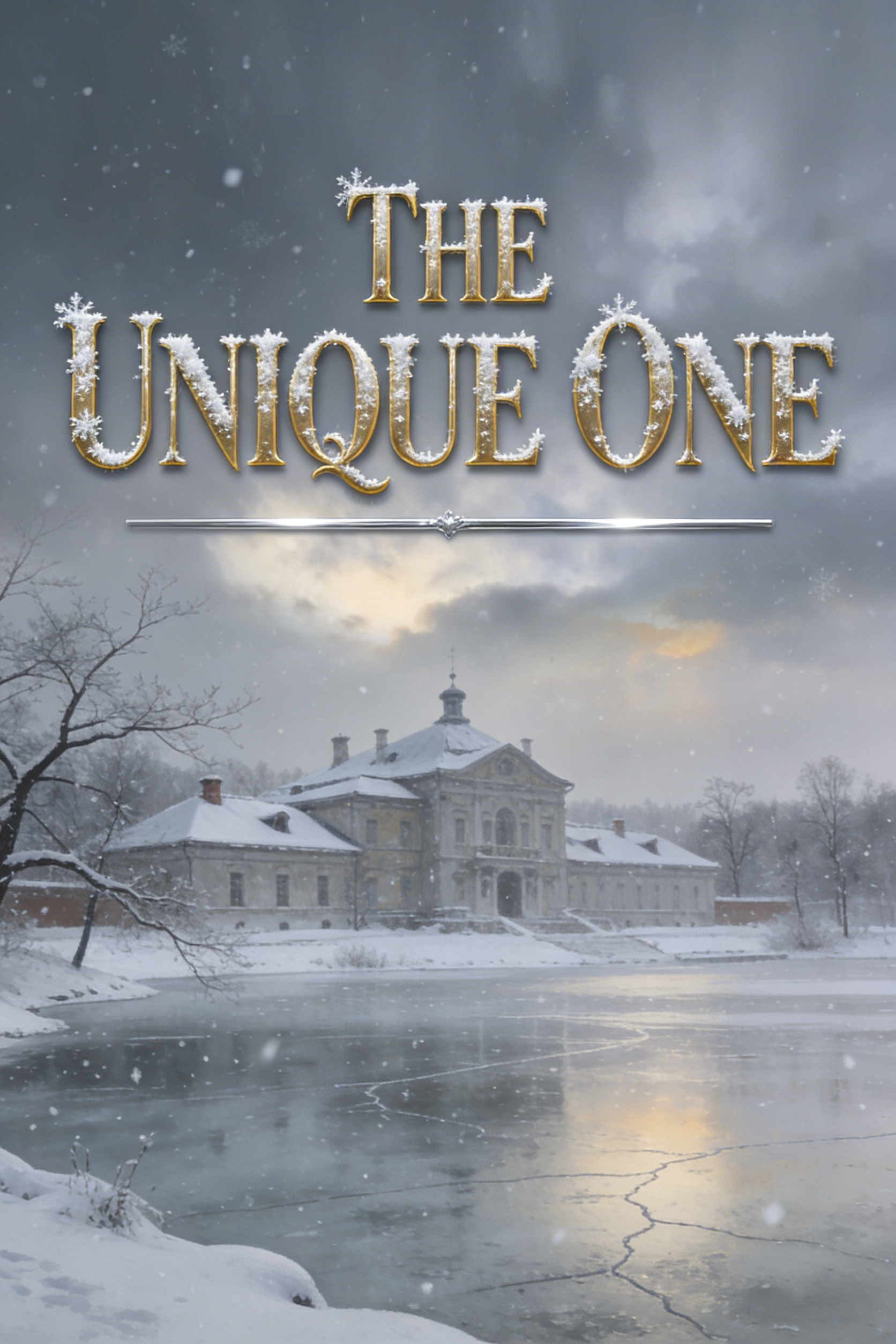
The Unique One ———  ✦  ——— A Novel of Imperial Russia Part One The Estate at Ostankino "In the beginning, there was only the garden, and the two children who played in it, innocent of the world that waited beyond the gates." Chapter I: The House of Prince Semyonov In the year of Our Lord 1819, when the Emperor Alexander still sat upon the throne of all the Russias, and the winds of revolution that had swept across Europe had not yet reached the frozen heart of the Empire, there stood upon a gentle rise some ten versts from Moscow a great house of pale yellow stone. This was the estate of Prince Nikolai Semyonov, a man whose lineage stretched back through centuries of boyars to the very founding of the Russian state, and whose fortune, though diminished by the extravagances of his forefathers, remained sufficient to maintain the dignity of his ancient name. The house at Ostankino was built in the classical style that had come into fashion during the reign of Catherine the Great, with a portico of white Corinthian columns supporting a triangular pediment, and long windows that caught the morning sun and scattered it across the parquet floors within. Behind the house lay an extensive park, designed in the English manner, with winding paths that led through groves of birch and linden, past artificial lakes where swans glided in eternal serenity, and finally to a dense forest of pine and spruce that marked the boundary of the estate. It was in this house, on a cold morning in late November, that Prince Semyonov sat in his study, reading through the correspondence that had accumulated during his recent absence in Petersburg. He was a man of sixty years, with a high forehead and gray eyes that had once been described by a French diplomat as "capable of seeing through the soul of a man as easily as through a window of clear glass." His hair, once dark as a raven's wing, was now entirely white, and he wore it brushed back from his forehead in the manner of the Emperor himself. The prince was not a happy man, though he possessed everything that the world considers necessary for happiness: wealth, position, a noble name, and the respect of his peers. His wife had died many years ago, giving birth to their only child, a daughter whom he had named Vera, after his own mother. The child had been raised by nurses and governesses, while the prince buried his grief in the administration of his estates and the service of the state. Now, as he sat in his study, listening to the wind that rattled the windows and drove the snow against the glass, he found himself thinking of the daughter who had grown to womanhood under his roof, yet remained in many ways a stranger to him. Vera Semyonova was eighteen years old, and by the standards of her class and time, she was accounted a great beauty. She had inherited her mother's delicate features and fair complexion, along with her father's penetrating gray eyes and the proud bearing that marked all the members of his ancient house. She was tall and slender, with a graceful carriage that made her seem to glide rather than walk, and a voice that was soft and musical, though she used it sparingly, preferring to listen rather than to speak. But it was not for her beauty alone that Vera was remarkable. From her earliest childhood, she had displayed a quickness of mind and a depth of feeling that distinguished her from the other girls of her acquaintance, who were content to spend their days in the trivial pursuits that filled the lives of well-born young ladies. While they practiced their scales on the pianoforte and embroidered endless lengths of linen, Vera read the books in her father's library, devouring the works of Voltaire and Rousseau, of Goethe and Schiller, and even the forbidden volumes of the French Encyclopedists that her father kept locked in a special cabinet. It was this love of reading that had brought her, on this particular morning, to the library of the great house, where she sat by the window with a volume of Pushkin's verses open upon her lap. But her eyes were not upon the page. Instead, she was gazing out at the snow-covered garden, where a young man was walking with long, impatient strides, his dark head bent against the wind. Chapter II: Childhood Companions The young man in the garden was Ivan Volkov, the son of Prince Semyonov's late sister, who had married a minor nobleman of modest means. Ivan's father had died when the boy was only five years old, and his mother, broken by grief and the struggle to maintain her position in society, had followed him to the grave within two years. Prince Semyonov, who had never been close to his sister during her lifetime, had nevertheless accepted the responsibility of raising her orphaned son, bringing him to Ostankino to be educated alongside his own daughter. Ivan was two years older than Vera, and from the first day of his arrival at the estate, the two children had formed a bond that grew stronger with each passing year. They had explored the gardens together, climbing trees and catching fish in the streams, building castles in the snow during the long winter months, and lying on their backs in the summer grass, watching the clouds drift across the endless Russian sky. They had shared their secrets, their dreams, their fears, and their hopes, becoming so inseparable that the servants had taken to calling them "the two souls," as if they were but different aspects of a single being. As they grew older, their relationship had naturally changed. The games of childhood had given way to more serious pursuits: long walks in the park, during which they discussed the books they had read and the ideas that stirred their young minds; evenings in the music room, where Ivan would play the piano while Vera turned the pages of his score; and stolen moments in the library, when they would sit together by the fire, speaking in low voices of the future that awaited them beyond the confines of the estate. It was during one of these conversations, on a winter evening when they were fifteen and seventeen respectively, that Ivan had first spoken of his feelings for his cousin. They had been discussing a novel by Madame de Stael, and Vera had expressed the opinion that true love could only exist between equals, between souls that recognized in each other a kindred spirit. Ivan had listened to her in silence, his dark eyes fixed upon her face with an intensity that she had never seen before. "And if two such souls were to meet," he had asked, his voice low and trembling, "if they were to recognize each other, despite all the obstacles that the world might place between them, would it not be their duty to remain faithful to that recognition, whatever the cost?" Vera had looked at him then, and in his eyes she had seen something that made her heart beat faster, something that she had perhaps always known was there, but had never dared to acknowledge. "Yes," she had whispered. "It would be their duty, and their privilege." From that day forward, an understanding had existed between them, unspoken but no less real for its silence. They were young, and the world was wide, and many years might pass before they could claim the happiness that they both desired. But they were patient, and their love was strong, and they believed that in the end, all would be well. Now, as Vera watched Ivan walking in the garden, she felt a sudden premonition of trouble, a chill that passed through her heart like the shadow of a cloud across the sun. She closed her book and rose from her chair, wrapping her shawl more closely about her shoulders as she made her way to the door. Chapter III: The Promise Ivan was standing by the frozen pond when Vera found him, his hands thrust deep into the pockets of his greatcoat, his breath rising in white clouds in the cold air. He turned as she approached, and she saw at once that something was troubling him. His face, normally so open and cheerful, was drawn and serious, and there were lines of worry about his eyes that she had never seen before. "What is it, Ivan?" she asked, coming to stand beside him. "What has happened?" He was silent for a moment, staring out across the frozen water. "I have received a letter," he said at last. "From my uncle in Petersburg. He writes that he has secured a commission for me in the Preobrazhensky Guards, and that I am to join the regiment at once." Vera felt as if the ground had suddenly shifted beneath her feet. The Preobrazhensky Guards! It was one of the most prestigious regiments in the Imperial Army, and a commission there was a mark of the highest favor. Any young man of their class would have given his right arm for such an opportunity. And yet, as she looked at Ivan's face, she saw that he was not happy. "But that is wonderful news," she said, though her voice was hollow. "Is it not what you have always wanted?" "It is what I have always been taught to want," he replied bitterly. "But what I want, Vera, what I truly want, is here. With you." He turned to face her, and she saw that his eyes were bright with unshed tears. "How can I leave you? How can I go to Petersburg, to that world of balls and parades and empty ceremony, when my heart is here with you?" Vera reached out and took his hand, feeling the cold of his skin against her own. "You must go, Ivan. It is your duty, and your opportunity. The Emperor himself takes a personal interest in the Guards. Who knows what doors such a position might open?" "And what of us?" he asked. "What of our plans, our dreams?" "They will wait," she said softly. "I will wait. However long it takes, Ivan, I will wait for you." He took her other hand then, and they stood facing each other in the falling snow, their breath mingling in the cold air. "Swear it," he said. "Swear that you will wait for me, whatever happens." "I swear it," she replied, and her voice was steady and clear. "By all that is holy, by the memory of my mother and the love I bear you, I swear that I will wait for you, Ivan Volkov, until the end of my days." He drew her into his arms then, and they held each other close, oblivious to the cold and the snow, to the world and all its troubles. In that moment, they were alone together, two souls united against the darkness that threatened to engulf them. But even as they stood there, making their promises and dreaming their dreams, the forces that would tear them apart were already in motion. In the great cities of Europe, men were talking of freedom and equality, of the rights of the common people and the tyranny of kings. In the coffee houses of Paris and the lecture halls of Berlin, new ideas were taking shape, ideas that would soon spread across the continent like wildfire, consuming everything in their path. And in the frozen heart of Russia, where the Emperor ruled with an iron hand and the secret police watched every whisper of dissent, these ideas were already finding fertile ground. The Decembrists, as they would come to be called, were gathering in secret, plotting a revolution that would shake the Empire to its foundations. Among them, though neither Vera nor Ivan knew it yet, was Prince Nikolai Semyonov himself. Part Two The Tempest "The storm breaks without warning, and those who thought themselves safe find themselves swept away by forces they cannot comprehend." Chapter IV: Whispers of Revolution The years that followed Ivan's departure were years of great change in Russia. Emperor Alexander, who had once been hailed as the "Liberator of Europe" for his role in the defeat of Napoleon, grew increasingly conservative as he aged, surrounding himself with reactionary advisors and turning a deaf ear to the pleas for reform that came from all quarters of his vast empire. The brief flowering of liberal ideas that had marked the early years of his reign was now a distant memory, replaced by a climate of suspicion and fear in which even the mildest criticism of the government could lead to arrest and exile. Prince Semyonov, who had once been a model of the loyal servant of the throne, found himself increasingly alienated from the government he had served all his life. The corruption and incompetence that he saw everywhere around him, the cruel treatment of the serfs who worked his lands, the suppression of any attempt at intellectual or political freedom—all these things ate away at his conscience until he could no longer remain silent. It was thus that he had become involved, gradually and almost without realizing it, with a group of young officers who called themselves the Union of Salvation, and later the Union of Welfare. These men, many of them veterans of the Napoleonic Wars who had seen firsthand the fruits of revolution in France and the benefits of constitutional government in Western Europe, dreamed of bringing similar changes to their own country. They met in secret, in the back rooms of taverns and the private apartments of sympathetic nobles, discussing the works of the French philosophes and drafting constitutions for a Russia that might one day be free. Prince Semyonov, with his wealth and his position, was a valuable recruit to their cause. He provided meeting places for the conspirators, contributed money to their treasury, and used his influence to protect them from the ever-watchful eyes of the Third Section, the secret police established by the Emperor to root out dissent. In return, he was given a new sense of purpose, a cause to which he could devote the remaining years of his life. But he was not careful enough. In the spring of 1825, a servant in his household, tempted by the promise of a reward, betrayed him to the authorities. The Third Section moved quickly, arresting the prince in the middle of the night and carrying him away to the Peter and Paul Fortress in Petersburg, where he was thrown into a damp cell and left to contemplate his fate. Vera learned of her father's arrest from the captain of the guard who came to search the house. She was twenty-two years old now, and in the years since Ivan's departure, she had grown from a shy girl into a woman of remarkable strength and character. She received the news with a composure that surprised even herself, directing the servants to cooperate with the search and answering the officers' questions with a calm dignity that won their reluctant respect. But when they had gone, and she was alone in her room, she allowed herself to weep. Not for herself, though she knew that her own position was now precarious, but for her father, who had always been so proud and independent, now reduced to a prisoner in a damp cell. And for Ivan, who was somewhere in the south with his regiment, unaware of the catastrophe that had befallen the only family he had ever known. Chapter V: The Arrest The trial of Prince Semyonov was a brief affair, conducted in secret before a military tribunal that had already decided upon his guilt before the first word was spoken. The evidence against him was overwhelming: letters to his fellow conspirators, records of meetings, lists of contributors to the revolutionary fund. There was no possibility of defense, no hope of mercy. On a cold morning in December, Vera was summoned to the fortress to bid farewell to her father. She was conducted through a maze of corridors and staircases, past guards who stared at her with blank indifference, until she reached the cell where the prince was being held. He was sitting on a wooden bench, his head bowed, his hands clasped in his lap. He looked up as she entered, and she saw that he had aged twenty years in the few weeks of his imprisonment. "My daughter," he said, rising to embrace her. "I have brought shame upon you, and upon our name. Can you forgive me?" "There is nothing to forgive," she replied, holding him tightly. "You have done what you believed to be right. That is all that any of us can do." He drew back then, and looked into her eyes with a gaze that was both tender and fierce. "Listen to me, Vera. I have little time, and there are things you must know. The men who will come for me—they will not stop with my death. They will want to destroy everything I have built, everything I have loved. You must be careful. Trust no one, except..." He paused, and a strange expression crossed his face. "Except Ivan. He loves you, does he not?" Vera felt the blood rush to her cheeks, but she did not lower her eyes. "Yes, Father. We have loved each other since we were children." The prince nodded slowly. "I have always known. And I have approved, though I never spoke of it. He is a good man, Vera, and he will make you happy. But you must find him, wherever he is, and tell him what has happened. He will know what to do." He pressed something into her hand—a small golden locket that had belonged to her mother. "Keep this," he said. "And remember, whatever happens, that I have loved you more than life itself." The next morning, Prince Nikolai Semyonov was led out to the courtyard of the fortress and shot by a firing squad. His body was buried in an unmarked grave, and his name was struck from the rolls of the nobility. His estates were confiscated by the Crown, and his daughter, who had once been one of the most eligible young women in Moscow society, found herself without home, without fortune, and without protection in a world that had suddenly turned hostile. But the Emperor's vengeance was not yet complete. In the weeks that followed, a decree was issued from the Winter Palace, ordering that all female relatives of convicted traitors should be taken into the service of the Crown, to be trained as ladies-in-waiting or maids of honor in the Imperial household. It was a punishment that was considered merciful, compared to the exile or imprisonment that might have been imposed. But for Vera, who had known only freedom and independence, it was a fate worse than death. Chapter VI: Into the Winter Palace The Winter Palace, that vast edifice of white and gold that stretched along the banks of the Neva River, was the center of the Russian Empire, the stage upon which the drama of Imperial power was played out. Within its thousand rooms, the Emperor held his court, receiving ambassadors and petitioners, granting audiences and dispensing favors, while around him swirled a world of ceremony and intrigue that would have astonished the most jaded observer of human nature. It was into this world that Vera Semyonova was thrust, a lamb among wolves, a prisoner in a gilded cage. She was given a small room on the fourth floor, overlooking a courtyard where the servants came and went on their endless errands, and assigned to the household of the Empress Mother, a widow of eighty who spent her days in prayer and her nights in memories of the past. The work was not hard. Vera was required to attend upon the old Empress, reading to her when her eyes grew tired, writing her letters, and accompanying her on the rare occasions when she left her apartments. In return, she was given food and clothing, a small stipend, and the dubious protection of the Imperial household. She was, in effect, a servant, though a servant of high rank, and she was treated with a cold politeness by the other ladies of the court, who knew her history and were careful to keep their distance. But Vera did not complain. She had learned, in the hard school of her father's fall, to hide her feelings behind a mask of composure, to suffer in silence and to wait. And so she waited, through the long winter months, through the endless round of ceremonies and receptions, through the empty days and the sleepless nights, for some word from Ivan, some sign that he had not forgotten her. She wrote to him, of course, as soon as she had learned of her father's fate. But the letter had been intercepted by the authorities, and she had received no reply. She wrote again, and again, each time more desperately than the last, but all her letters vanished into the labyrinth of the Imperial postal system, and she was left to wonder whether they had ever reached their destination. Meanwhile, life in the palace went on. Emperor Alexander died suddenly in December of 1825, and his death set off a crisis that would shake the Empire to its foundations. The Decembrist uprising, which took place on the first day of the new reign, was crushed with brutal efficiency, and its leaders were arrested, tried, and sentenced to death or exile. Among them were many men whom Vera's father had known and worked with, and she watched from behind her mask as the court celebrated the victory of order over chaos, the triumph of the autocracy over its enemies. But she was not entirely without hope. In the spring of 1826, a new lady-in-waiting arrived at the palace, a young woman named Anna Karamzina, who had been appointed to the household of the Grand Duchess Elena. Anna was different from the other women of the court. She was intelligent and well-read, with a sharp tongue and a ready wit that made her the terror of the palace gossips. She and Vera became friends, and in the privacy of their shared room, they spoke of things that would have shocked their superiors: of poetry and philosophy, of the rights of women and the evils of serfdom, of the future that might one day dawn upon their unhappy country. It was Anna who brought Vera the news that changed everything. One evening, as they sat together by the window of their room, watching the sun set over the Neva, Anna turned to her friend with a strange expression on her face. "I have something to tell you," she said. "Something I have kept secret until now, for fear of compromising you. But I can keep silent no longer." Vera looked at her in surprise. "What is it, Anna?" Anna took a deep breath. "I have a brother, Alexei, who serves in the Preobrazhensky Guards. He wrote to me last week, and in his letter, he mentioned a certain Captain Volkov, who has been asking questions about a certain lady who was once known as Vera Semyonova." Vera felt her heart stop. "Ivan?" she whispered. "He is looking for me?" "He has been looking for you for months," Anna replied. "Ever since he learned of your father's fate. He tried to reach you at Ostankino, but the estate had been sealed. He wrote to the palace, but his letters were returned unopened. Finally, he approached my brother, knowing that I was here, and asked him to find out what had become of you." Vera felt tears streaming down her face, tears of joy and relief and sorrow all mingled together. "He has not forgotten me," she said. "After all this time, he has not forgotten." "No," Anna said softly. "He has not forgotten. And now that I have seen you, my dear friend, I will write to my brother and tell him where you are. And perhaps, if the fates are kind, you will be reunited with your captain before the year is out." Part Three The Search "When love commands, the soul obeys, and no obstacle is too great for the heart that knows what it seeks." Chapter VII: The Wanderer Ivan Volkov had not forgotten. In the three years since he had left Ostankino, he had thought of Vera every day, every hour, every moment of wakefulness. Her face was the first thing he saw when he closed his eyes at night and the last thing he remembered before sleep claimed him. Her voice echoed in his ears, her touch lingered on his skin, and her name was a prayer upon his lips. The news of Prince Semyonov's arrest had reached him in his barracks in the south, and he had immediately applied for leave to go to his cousin's aid. But his request had been denied, and before he could appeal the decision, the prince was dead and Vera had vanished into the labyrinth of the Imperial household. For months, he had searched for her, using every contact he possessed, every favor he was owed, every resource at his disposal. He had written letters, made inquiries, bribed officials, and threatened enemies, all to no avail. The Imperial household was a closed world, impenetrable to outsiders, and Vera might as well have been dead for all the information he could obtain about her. But he had not given up. He had transferred to a regiment stationed in Petersburg, hoping to be closer to where she was held. He had cultivated the friendship of officers who had connections at court, pumping them for information without revealing his true purpose. And finally, through the brother of Anna Karamzina, he had learned where Vera was and what had become of her. The news that she was alive, that she had not forgotten him, that she still waited for him as she had promised, filled him with a joy that was almost painful in its intensity. But it was followed almost immediately by despair. For how could he reach her? The Winter Palace was a fortress, and the women who served within it were as closely guarded as the crown jewels themselves. No man, not even a high-ranking officer, could simply walk in and demand to see a lady-in-waiting. He considered, and rejected, a dozen schemes. He thought of disguising himself as a servant, of bribing a guard to look the other way, of scaling the walls in the dead of night. But all these plans were doomed to failure, and he knew it. The palace was too well guarded, the risks too great. If he were caught, he would be arrested, perhaps even executed, and Vera would be left alone in the world, with no one to help her. It was in the depths of this despair that he heard of the man who would change everything. His name was Dmitri Kuznetsov, and he was known throughout Petersburg as the Physician of Kazan. He was a strange figure, this Kuznetsov, a man of uncertain origins who had appeared in the capital some years before and had quickly established a reputation as a healer of remarkable skill. He treated the rich and the poor alike, asking no payment from those who could not afford it and accepting whatever the wealthy chose to give. His methods were unorthodox, combining the traditional practices of Russian folk medicine with techniques learned, so he claimed, from the mystics of the East. But it was not his healing powers that interested Ivan. It was something else, something that was whispered about in the taverns and gambling dens of the city, in the kind of places where men spoke of things that were not mentioned in polite society. It was said that Kuznetsov possessed a secret, a knowledge that had been passed down through generations of Siberian shamans, a potion that could induce a state resembling death so perfectly that even the most experienced physician could not distinguish it from the real thing. This was what Ivan needed. If he could obtain this potion, if he could somehow get it to Vera, then she could escape from the palace in the guise of a corpse. The dead, after all, were not guarded. The dead were taken away and buried, forgotten by the world. And once she was free of the palace walls, once she was beyond the reach of the Imperial authorities, they could be together again, free to begin a new life in some distant land where no one knew their names. Chapter VIII: The Physician of Kazan Kuznetsov lived in a small house on the outskirts of the city, in a neighborhood of narrow streets and crumbling buildings that seemed to have been forgotten by the march of progress. The house itself was unremarkable, a wooden structure of two stories, with a small garden in front and a stable in the back. But there was something about it that made passersby quicken their steps and cross to the other side of the street, something that spoke of mysteries best left undisturbed. Ivan came to this house on a cold evening in November, his heart pounding with a mixture of hope and fear. He had dressed in civilian clothes, not wishing to reveal his military rank, and he carried in his pocket a purse containing all the money he had been able to raise, enough to buy a small estate in the provinces. If Kuznetsov demanded payment, he would pay whatever was asked. The door was opened by a young woman of remarkable beauty, with dark hair and eyes that seemed to look directly into his soul. She did not ask his name or his business, but simply stepped aside and gestured for him to enter. He found himself in a small room, dimly lit by a single candle, with walls covered in shelves that held hundreds of jars and bottles, each containing some mysterious substance that he could not identify. Kuznetsov himself was sitting in a high-backed chair by the fire, a man of perhaps sixty years, with a long white beard and eyes that were the color of pale amber. He was dressed in a simple robe of dark wool, and his hands, which rested on the arms of his chair, were long and thin, the hands of a scholar or an artist. "Welcome, Captain Volkov," he said, and his voice was soft and melodious, like the sound of wind through autumn leaves. "I have been expecting you." Ivan started. "You know my name?" Kuznetsov smiled, a gentle expression that did not quite reach his eyes. "I know many things, Captain. I know why you have come, and what you seek. I know of the woman you love, and of the cage in which she is held. And I know that you are willing to risk everything—your career, your fortune, even your life—to set her free." Ivan felt a chill run down his spine. "How do you know these things?" "The world is full of connections, Captain, invisible threads that bind us all together. Those who know how to see can follow these threads to wherever they lead." Kuznetsov leaned forward, and his amber eyes seemed to glow in the firelight. "But that is not important. What is important is that I can help you. I have the knowledge you seek, the secret of the death-sleep. And I am willing to share it with you." "At what price?" Ivan asked, his hand closing around the purse in his pocket. Kuznetsov shook his head. "I do not want your money, Captain. What I want is something far more valuable. I want your word—your solemn oath—that you will use this knowledge only for the purpose you have stated, and that you will never reveal its source to anyone. The secret I possess is a dangerous one, and in the wrong hands, it could do great harm." "You have my word," Ivan said, without hesitation. "I swear by all that I hold sacred that I will use this knowledge only to save the woman I love, and that I will carry the secret of its origin to my grave." Kuznetsov studied him for a long moment, as if weighing the truth of his words. Then he nodded slowly. "Very well. I will give you what you seek. But first, you must understand what it is you are asking for." He rose from his chair and walked to one of the shelves, taking down a small bottle of dark glass. "This," he said, holding it up to the light, "contains the essence of the death-sleep. It is a mixture of rare herbs and minerals, prepared according to a formula that has been handed down for centuries. When taken in the proper dose, it will cause the body to enter a state of suspended animation, in which all signs of life—breathing, heartbeat, even the warmth of the skin—will cease. To all outward appearances, the person who has taken it will be dead." "For how long?" Ivan asked. "That depends on the dose. A small amount will produce a sleep of a few hours. A larger dose can extend the effect for days, even weeks. But there is a danger. If too much is taken, or if the antidote is not administered in time, the sleep becomes permanent. The person who takes it will die, truly and irrevocably." Ivan felt his blood run cold. "And the antidote?" Kuznetsov took down another bottle, this one of clear glass, containing a liquid that glowed with a faint golden light. "This is the awakening," he said. "It must be administered within a certain time, depending on the dose of the sleep. If given too late, it will have no effect." He handed both bottles to Ivan, who took them with hands that trembled slightly. "How will I know how much to give her?" he asked. "I will give you precise instructions," Kuznetsov replied. "But you must follow them exactly. There is no room for error. The life of the woman you love depends upon your care." Chapter IX: The Potion The weeks that followed were the most anxious of Ivan's life. He had the potion, he had the instructions, but he still had no way of getting them to Vera. The palace was as impenetrable as ever, and his every attempt to contact her was met with failure. He wrote to Anna Karamzina, explaining his plan and asking for her help. She replied, after what seemed an eternity, with a message that was both encouraging and frustrating. She would do what she could, she said, but the risks were great. If their correspondence were discovered, they would all be arrested, and Vera's position would become even more precarious than it already was. But Anna was resourceful, and she was brave. Through a network of servants and minor officials, she managed to establish a channel of communication between Ivan and Vera, a tenuous thread of letters passed from hand to hand, each one a small miracle of concealment and subterfuge. In these letters, Ivan explained his plan. He told Vera about the potion, about its powers and its dangers, about the need for precise timing and absolute secrecy. He asked her to find a pretext for leaving the palace, some errand or duty that would take her beyond its walls. Once she was outside, he would be waiting, with a carriage and horses ready to carry them away. Vera's reply was cautious but hopeful. She had found a possible opportunity, she wrote. The Empress Mother was planning a pilgrimage to a monastery some twenty versts from the city, and she had requested that Vera accompany her. The journey would take three days, and during that time, they would be staying at the monastery's guesthouse, which was far less secure than the palace itself. But there was a problem. The Empress Mother was attended by a large retinue, including guards and servants who would be watching Vera at all times. She would need to find a way to slip away from the group, even if only for a few hours, and she would need a plausible excuse for her absence. Ivan thought long and hard about this problem. Finally, he hit upon a solution. He would arrange for a message to be delivered to Vera at the monastery, informing her that a distant relative had fallen ill and was asking for her. This would provide a legitimate reason for her to leave the group, at least temporarily. And once she was away from the others, she could take the potion and be carried off as if she had died of a sudden illness. The plan was risky, he knew. There were a hundred things that could go wrong, a hundred ways in which it could fail. But it was the only chance they had, and they had to take it. The day of the pilgrimage arrived, and with it, the culmination of all their hopes and fears. Ivan stationed himself in a village near the monastery, disguised as a traveling merchant, and waited for word from Vera. The hours passed with agonizing slowness, each one an eternity of suspense. Finally, on the second day of the pilgrimage, a message came. Vera had received the false news of her relative's illness, and had obtained permission to leave the monastery for a few hours to visit her. She would be traveling by a certain road at a certain time, accompanied by only two servants. Ivan was ready. He had hired a carriage and a team of fast horses, and he had bribed a local physician to be present at the scene, to certify the death and ensure that Vera's body was released to him for burial. Everything was in place. All that remained was for Vera to take the potion and trust in the power of their love to bring her back from the brink of death. Part Four Resurrection "Love is stronger than death, and those who love deeply will find each other, even across the gulf that separates life from life." Chapter X: The Escape The road from the monastery wound through a forest of birch and pine, the trees heavy with snow, their branches bending under the weight of winter. Vera traveled in a small sleigh, wrapped in furs against the cold, her heart beating so loudly that she feared the servants who accompanied her would hear it. She had taken the potion an hour before, concealed in a cup of tea that she had prepared herself. The instructions had been precise: she must take it at a certain time, so that the effect would begin at the exact moment when Ivan was waiting. She had felt nothing at first, only a slight dizziness that she had attributed to anxiety. But as the sleigh made its way along the forest road, she began to feel a strange lassitude spreading through her limbs, a heaviness that made it difficult to keep her eyes open. She knew that the sleep was coming, and she forced herself to remain conscious a little longer, to give the servants time to reach the appointed place. They were simple country people, honest and loyal, who had no idea of the drama that was unfolding before their eyes. They would be witnesses to her death, unwitting accomplices in a deception that would free her from her prison. The sleigh rounded a bend in the road, and she saw a carriage waiting by the side, with a man standing beside it, his face hidden by the collar of his greatcoat. It was Ivan. She knew it was Ivan, though she could not see his face. And in that moment, as their eyes met across the frozen landscape, she felt a surge of joy that drove back the darkness that was closing in around her. Then the sleep took her, and she knew no more. When the servants saw their mistress slump forward in her seat, they cried out in alarm. They stopped the sleigh and rushed to her side, but they could find no pulse, no breath, no sign of life. She was dead, it seemed, struck down by some sudden illness in the prime of her youth. It was then that the physician appeared, a respectable-looking man with a black bag in his hand, who claimed to have been traveling on the same road and witnessed the incident. He examined the body with professional thoroughness, then pronounced the unfortunate lady dead of an apoplexy, brought on by the cold and the exertion of the journey. The servants were distraught. What would they tell the Empress Mother? What would become of them, who had allowed their charge to die under their care? But the physician was reassuring. Such things happened, he said, especially to those of delicate constitution. The important thing now was to see to the proper disposal of the body. He happened to know of a nearby village where the deceased could be laid out until arrangements could be made for her burial. The servants, grateful for any guidance in their distress, agreed to this plan. The body was transferred to the waiting carriage, and the physician climbed in beside it, promising to send word to the monastery as soon as they reached the village. The servants watched the carriage disappear around the bend in the road, then turned their sleigh around to carry the terrible news to their mistress. But the carriage did not go to the village. Instead, it turned onto a side road that led deeper into the forest, where Ivan had prepared a hiding place in an abandoned hunting lodge. There, in the flickering light of a fire, he administered the antidote to Vera, watching her pale face with a heart that was torn between hope and fear. The minutes passed like hours. He held her cold hand in his, whispering her name, begging her to return to him. And then, just when he was beginning to despair, he saw a flutter of her eyelids, a faint movement of her lips. She was breathing. She was alive. She opened her eyes, and for a moment, she looked at him without recognition, her gaze clouded with confusion. Then the awareness returned to her face, and she smiled, a smile of such sweetness that it broke his heart. "Ivan," she whispered. "I knew you would come." Chapter XI: Across the Frozen Wastes They could not stay in the hunting lodge for long. The alarm would be raised soon, if it had not been already, and the authorities would be searching for them. They had to put as much distance as possible between themselves and Petersburg before their escape was discovered. Ivan had planned their route with care. They would travel east, into the vast expanse of Siberia, where the arm of the law was shorter and the population was sparse. There were settlements there, on the fringes of the empire, where a man and a woman could disappear, where no one would ask questions about their past or their reasons for coming. But the journey would be hard. It was the depths of winter, and the temperatures had fallen to levels that threatened the life of anyone exposed to them for more than a few hours. The roads were buried under snow, and the rivers were frozen solid. They would have to travel by sleigh, following the tracks of the fur traders and the exiles who were sent to labor in the mines of the east. They traveled by night, when the darkness concealed their movements, and hid by day in the villages and way stations that dotted the route. Ivan had prepared false papers for them both, identifying them as a merchant and his wife traveling to Irkutsk on business. The papers were good, but they would not withstand close scrutiny, and they avoided the larger towns where the police were more vigilant. Vera was weak from her ordeal, and the rigors of the journey took a heavy toll on her. She never complained, but Ivan could see the exhaustion in her eyes, the way her hands trembled when she thought he was not looking. He would have liked to travel more slowly, to give her time to recover, but they could not afford the luxury. Every day they spent on the road was a day of danger, a day in which they might be discovered and captured. They had been traveling for two weeks when the storm caught them. It came without warning, a howling wind that drove the snow before it in blinding sheets, reducing visibility to nothing and turning the road into a treacherous maze of drifts and ice. Their horses stumbled and refused to go on, and they were forced to seek shelter in a copse of trees, huddling together under their furs as the storm raged around them. For three days, they were trapped, unable to move, unable even to light a fire for fear of attracting attention. They had food for only a day, and they rationed it carefully, eating only enough to keep their strength up. The cold was intense, a living thing that seemed to reach into their very bones, and Ivan feared that they would not survive. But they had each other, and that made all the difference. They talked, to keep their minds off the cold and the hunger, speaking of the past and the future, of the life they would build together when they reached their destination. They spoke of Ostankino, of the garden where they had played as children, of the promises they had made and kept. They spoke of love, and of the strange fate that had brought them together and torn them apart and brought them together again. And on the fourth day, the storm broke. The sun rose over a transformed landscape, a world of white that stretched to the horizon in every direction, pristine and beautiful and terrifying in its emptiness. They emerged from their shelter, stiff and cold but alive, and resumed their journey. The days that followed were a blur of snow and ice, of frozen rivers and dark forests, of villages where they were welcomed and villages where they were turned away. They traveled through the Urals, those mountains that marked the boundary between Europe and Asia, and descended into the endless plains of Siberia. They passed through towns with names that sounded strange to their ears: Tyumen, Tobolsk, Omsk. And always, they moved eastward, toward the rising sun and the hope of a new beginning. It was in the town of Krasnoyarsk, on the banks of the mighty Yenisei River, that they received the news that changed everything. They had stopped at an inn to rest and replenish their supplies, and Ivan had fallen into conversation with a trader who had recently come from the east. The man spoke of a settlement on the shores of Lake Baikal, a place called Verkhneudinsk, where a group of Old Believers had established a community far from the interference of the authorities. "They keep to themselves," the trader said. "Don't bother nobody, and don't want nobody bothering them. If a man was looking for a place to disappear, he could do worse than Verkhneudinsk." Ivan and Vera exchanged glances. This was what they had been looking for, a place where they could start over, where their past would not follow them. They thanked the trader and set out the next morning, following the river eastward toward the great lake and the promise of peace. Chapter XII: Reunion They reached Lake Baikal in the middle of January, when the lake was frozen so solid that a carriage could drive across it without danger. The sight of it took their breath away—a vast expanse of ice that stretched to the horizon, surrounded by mountains whose peaks were lost in the clouds. It was a landscape of terrible beauty, a reminder of how small they were in the face of nature's grandeur. Verkhneudinsk lay on the eastern shore of the lake, a cluster of wooden houses huddled together against the cold. It was not a large place, perhaps a hundred souls in all, but it was thriving. The people were simple but kind, and they asked no questions of the young couple who appeared one day out of the frozen wilderness, seeking shelter and a place to call home. Ivan had money, the savings of a lifetime of soldiering, and he used it to buy a small house on the edge of the settlement, with a plot of land where they could grow vegetables in the brief summer and keep a few animals to see them through the winter. It was a modest existence, far removed from the luxury they had known in their former lives, but it was theirs, and that made it precious. They were married in the spring, in a simple ceremony conducted by an Orthodox priest who had wandered into the settlement some years before and decided to stay. There were no guests, no celebrations, no gifts beyond the good wishes of their neighbors. But as they stood together before the iconostasis, exchanging their vows, they felt a joy that no earthly treasure could match. "I, Ivan, take thee, Vera, to be my wedded wife," he said, and his voice was steady and clear. "To have and to hold, from this day forward, for better, for worse, for richer, for poorer, in sickness and in health, to love and to cherish, till death do us part." And she, looking into his eyes, repeated the same words, binding herself to him for all eternity. The years that followed were years of peace and contentment. They worked hard, rising before dawn and laboring until dark, but they did not mind the work, for it was their own. They built a life together, piece by piece, day by day, and they found in each other a happiness that they had never known was possible. Vera bore him three children, two sons and a daughter, and they raised them in the love and fear of God, teaching them to read and write and to honor the traditions of their ancestors. The children grew strong and healthy, and as they played in the snow and ran through the meadows in summer, their parents watched them with hearts full of gratitude for the blessings they had received. Sometimes, in the long winter evenings, when the fire crackled in the stove and the wind howled outside, Ivan and Vera would sit together and remember. They would speak of Ostankino, of the garden where they had played as children, of the father who had given his life for his principles, of the friends they had left behind. They would speak of the palace, of the fear and the loneliness, of the hope that had sustained them through the darkest hours. And they would speak of the journey, of the storm and the cold, of the moments when they had thought they would not survive. They would speak of the physician who had given them the means of their escape, and of the courage that had carried them across a continent to this distant place. But most of all, they would speak of love. Of the love that had brought them together, that had sustained them through separation and danger, that had conquered death itself. They would speak of it not as something extraordinary, but as the most natural thing in the world, as necessary as breath and as enduring as the mountains that surrounded their home. "Do you ever regret it?" Vera asked him once, on an evening when the northern lights danced across the sky in curtains of green and gold. "Do you ever wish that we had stayed in the world we knew, that we had accepted the lives that were offered to us?" Ivan took her hand and pressed it to his lips. "Never," he said. "I would do it all again, a thousand times over, for the chance to spend my life with you." And she smiled, that smile that had not changed since she was a girl, and leaned her head against his shoulder. Outside, the snow fell softly, covering the world in white, and the great lake lay frozen and still under the stars. But inside, by the fire, there was warmth, and light, and love—the only things, in the end, that truly matter. * * * And so our tale comes to an end, as all tales must. But the love of Ivan and Vera, like all true love, did not end with their lives. It lived on in their children, and in their children's children, and in all those who came after them, a testament to the power of the human heart to overcome even the greatest of obstacles. In a world of change and uncertainty, where empires rise and fall and the fortunes of men are as shifting as the sands, there is one thing that remains constant, one thing that no power on earth can destroy. That thing is love—love that endures, love that sacrifices, love that conquers all. May we all find such love, and may we be worthy of it when it comes. — The End —

Goods Tag

User Comment(This product has 2 customer reviews)

  • No comment
Total 02 records, divided into15 pages. First Prev Next
Username: Anonymous user
E-mail:
Rank:
Content:
Verification code: captcha

KMALL360 Quick Order: Register and make your 1st order together

Fast & Easy! Registration will be done at the same time, and a confirmation will be sent by email.

  • Product:
  • Remark:
    Typically your order will ship within 24 hours.
  • Quantity:
  • Total Price:   (Returns Accepted within 30 Days; Dispatch from the UK)
  • Your name: *
  • Tel:*
  • Country: *
  • Province/State:
  • City:
  • Address: *
  • Your Email: *
  • Set Your Password: *
  • 备注信息:
  • Shipping:
  • Payment: Credit/Debit Cards, and PaypalPapipagoBoleto.DotpayQIWIWebMoneyMOLPayIndonesia BanksDragonpayPaytmCash on Delivery
  •